Home › Asphalt Milling and Reclamation
Prepare old pavement for a new surface with asphalt milling in Lexington, KY. We grind off worn layers for smooth overlays and perform full depth reclamation where structure has failed. These services restore proper profiles, improve drainage, and recycle existing materials.
Precision Asphalt Lexington provides professional asphalt milling throughout Lexington, KY, Kentucky and the surrounding area. Our licensed, insured crew delivers safe, clean, on-time work with a free estimate before anything begins. Call (859) 710-8754 or request your free quote.
Practical Asphalt Milling Solutions for Lexington Properties
Asphalt milling is often the smartest way to fix worn or uneven pavement without paying for a full tear out. At Precision Asphalt Lexington, we use heavy milling machines to grind off a controlled depth of your existing asphalt, then leave a precise surface that is ready for new pavement.
In Lexington, many driveways, parking lots, and private roads have good base stone under them, even if the surface has cracks, rutting, or drainage problems. Milling lets us remove the bad surface layer while keeping the solid base, which saves cost and shortens downtime. Instead of hauling everything to a landfill, the milled material is typically recycled in new asphalt mixes.
Our team evaluates each site to decide whether you need shallow surface milling (usually 1 to 2 inches), deeper profile milling (3 inches or more), or full-depth reclamation that recycles the base material too. We do not push one method for every job. We match the process to the condition of the pavement, the traffic load, and your budget.
Because Lexington sees freeze-thaw cycles, salt use in winter, and summer heat, our milling work always focuses on drainage and joint quality. Bad joints and standing water are what destroy asphalt fastest here, so the milling plan has to fix those issues, not just make the surface look new.
How Asphalt Milling and Reclamation Are Actually Done
For a typical asphalt milling project with Precision Asphalt Lexington, the first step is layout and depth planning. We survey existing grades, check drainage patterns, and locate any structures such as drainage inlets, manholes, and concrete transitions. From this, we determine how many inches of asphalt need to come off in different areas to create proper slopes and tie-ins.
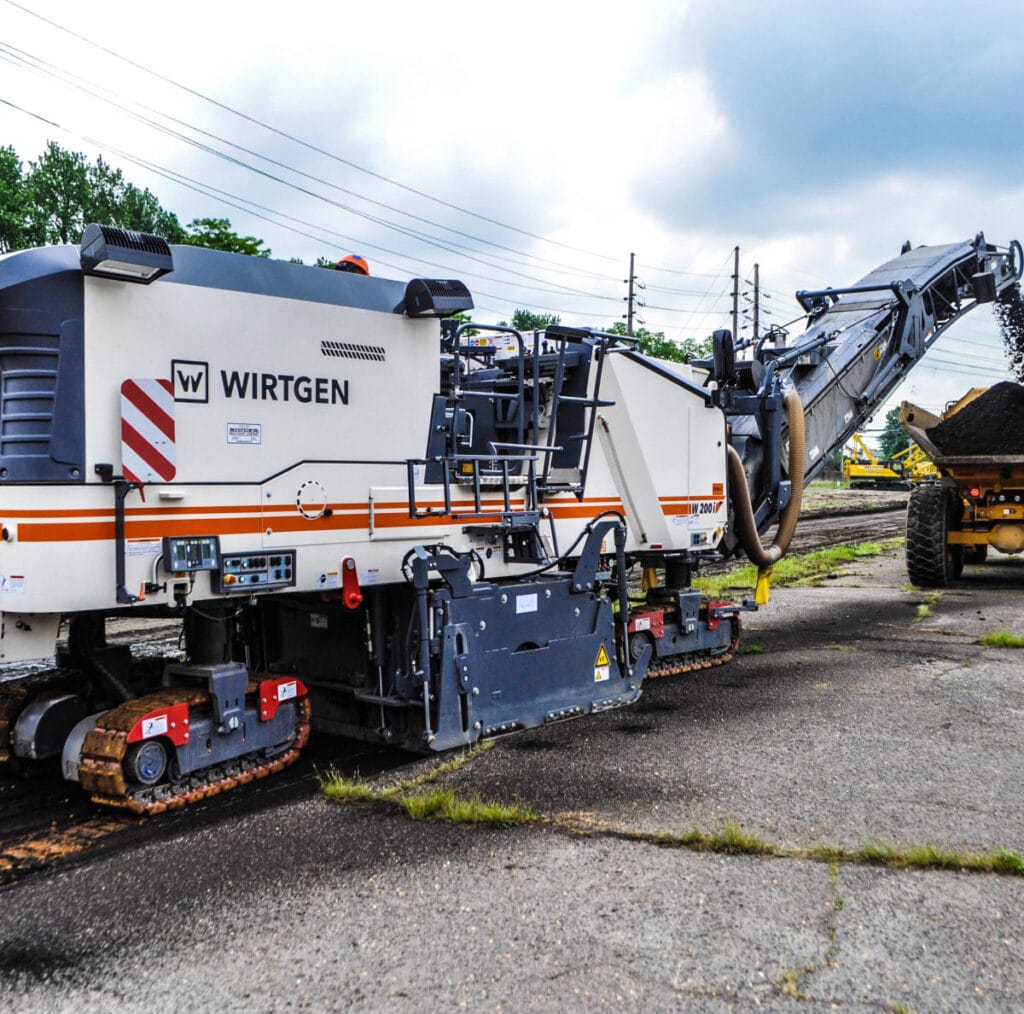
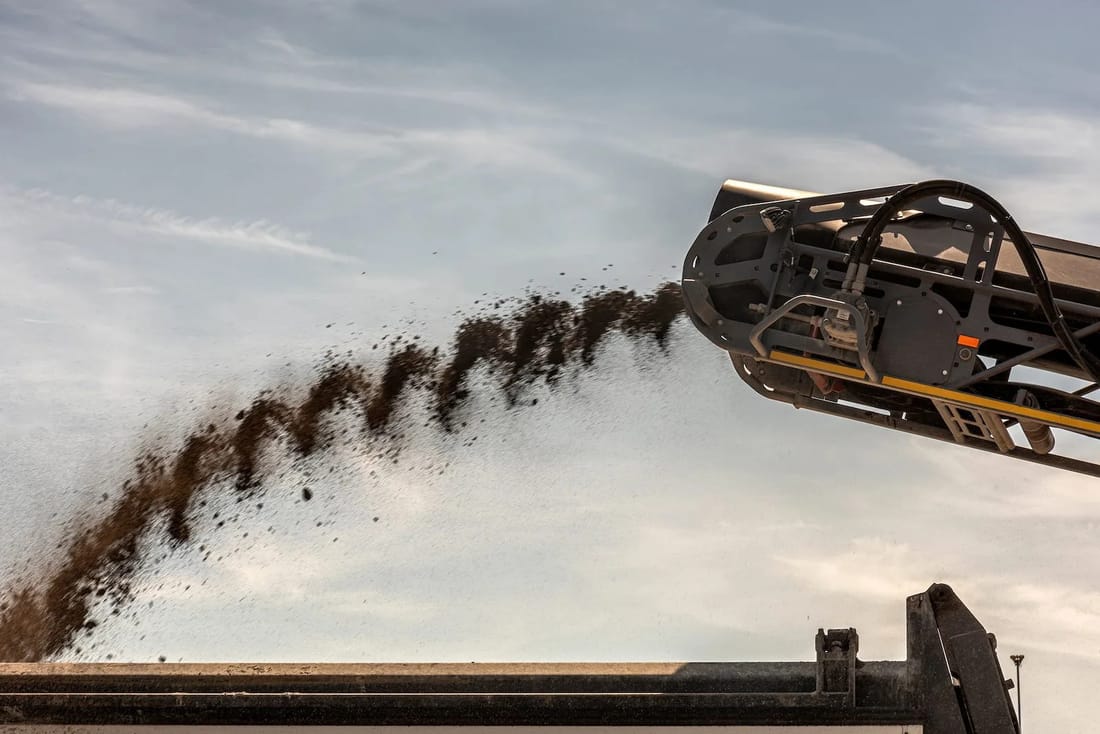
Next, our crew brings in a cold planer, the milling machine with a rotating drum and cutting teeth. We set the exact milling depth with automated grade controls or laser, then start grinding the surface in overlapping passes. The machine breaks the asphalt into small, uniform pieces and a conveyor loads them straight into waiting dump trucks. This keeps the site cleaner and speeds up hauling.
After the milling is complete, we broom and blow off the surface to remove loose material. At this point, we inspect the exposed layer carefully. We look for pumping base, soft spots, and reflective cracks that may require dig-out repairs or stabilization before any new asphalt goes down. If we find issues, we cut out and rebuild those areas so they do not reflect through the new surface in a year or two.
For full-depth reclamation, instead of just shaving the surface, we pulverize the asphalt and a portion of the base stone together, usually 6 to 10 inches deep. We blend it, sometimes with added cement or emulsion as a stabilizer, then compact it into a new base. After curing, new asphalt layers are paved on top. This method is useful on rural drives, private lanes, and older lots around Lexington where the base is failing but complete reconstruction would be too costly.
What Drives the Cost of Asphalt Milling in Lexington
Customers often ask why one milling quote is higher or lower than another. With Precision Asphalt Lexington, the cost is based on measurable factors, not guesswork. The main drivers are milling depth, total square footage, access for equipment, number of structures to match, and how much base repair is expected.
Shallow surface milling at 1 to 1.5 inches on a wide-open grocery store lot with easy truck access is far less expensive per square yard than deep milling in a tight, downtown Lexington parking area with numerous manholes and tight corners. Every time the milling machine has to stop and maneuver around an obstacle, production slows and costs go up.
Existing pavement condition also matters. If we expect a lot of soft spots, heavy cracking, or subsurface moisture problems, we have to budget for undercut repairs, base stone replacement, or stabilization. We discuss these possibilities with you upfront and, where possible, build in unit prices for repairs so you know the cost before work starts.
Timing and traffic control affect cost as well. Night work in busy commercial areas, work adjacent to major Lexington routes like New Circle Road, or phased work where the lot must remain partially open will require more flaggers, cones, barricades, and mobilizations. We design traffic control plans that meet local requirements while keeping your business as operational as possible.
Lexington Climate, Scheduling, and Project Timing
Our central Kentucky weather directly impacts when and how asphalt milling and reclamation should be done. At Precision Asphalt Lexington, we plan schedules around local conditions so your project lasts instead of failing early.
Milling can technically be done in a wider temperature range than paving, but we still prefer moderate conditions. Cold, wet subgrades lead to more base failures and difficulty compacting new asphalt. In Lexington, the most reliable milling and paving windows are typically late March through early June and September through early November. We avoid milling and then leaving surfaces open for long periods during freeze-thaw seasons, since water infiltration can quickly damage the base.
If milling must be done in winter, we coordinate closely on timing so that your milled surface is not exposed to repeated freezing rain and snow. For full-depth reclamation, we are more strict about temperature and moisture, especially if we are using cement or emulsion stabilizers that need specific curing conditions.
We also plan around local events and school schedules. For example, if your property is near the University of Kentucky, Keeneland, or high-traffic retail corridors, we may recommend night or off-peak milling to reduce disruption. We stage work in logical sections so customers, tenants, or residents still have access while the project progresses.
Common Problems We Solve With Asphalt Milling and Reclamation
Most of the milling and reclamation work we do around Lexington solves recurring problems that patching alone cannot fix. One of the most common issues is standing water in low spots. Over time, traffic compacts the asphalt and base in wheel paths, which creates ruts. Simple overlay makes these ruts worse. With milling, we can reset the profile by removing more depth where ruts are deeper and restoring proper cross-slope so water drains off the surface.
Another frequent problem is the buildup from years of overlays that have raised the pavement higher than curb lines, building entrances, or garage thresholds. This causes trip hazards, poor drainage, and plow damage in winter. Precision Asphalt Lexington uses milling to lower the pavement back to a sensible elevation, then repaves at a thickness that works with your curbs and entrances.
Full-depth reclamation is especially useful on older rural drives and industrial lots where the base has started to pump or break apart. Instead of chasing every soft area with small patches, we can reclaim the full section, stabilize the mixed-in material, and create a thicker, more uniform base that handles heavy trucks better.
We are also careful about transitions. Poorly handled milling can leave sharp lips at tie-in points, which become weak spots and tripping hazards. Our crews adjust milling depths around concrete approaches, ADA ramps, dock doors, and road connections to make smooth, stable transitions that meet functional and code requirements.
What You Should Know Before Hiring an Asphalt Milling Contractor
Before you hire any company for asphalt milling or reclamation in Lexington, it helps to ask a few pointed questions. At Precision Asphalt Lexington, we welcome detailed conversations, because good planning makes better pavement.
Ask how the contractor determines milling depth and grades. They should talk about survey work, slope checks, and controlling water flow, not just “taking off an inch.” Ask whether they own and operate their own mill or rely only on subs, and whether the machines use modern grade control systems. This affects both quality and schedule reliability.
Find out how they handle millings. In most cases, the milled asphalt is hauled to an asphalt plant for recycling into new mixes. Sometimes, on private rural drives, it can be reused on site as a temporary surface. You should know if there is any credit for the recyclable material and how that is figured in the price.
Also ask what their plan is for base inspection and repair. Any realistic milling proposal should mention potential undercuts, soft spots, or stabilization options, even if they cannot see them all during a walk-through. A “no surprises ever” quote often means either corners will be cut or you are paying for worst-case assumptions whether they occur or not.
Finally, review the phasing and communication plan. You should know which areas will be closed on which days, how customers or residents will be notified, and what happens if weather interrupts the schedule. Our goal at Precision Asphalt Lexington is to leave you with a smooth, durable surface and no doubt about how we got there or why each step was done the way it was.