Home › Private Road and Lane Paving
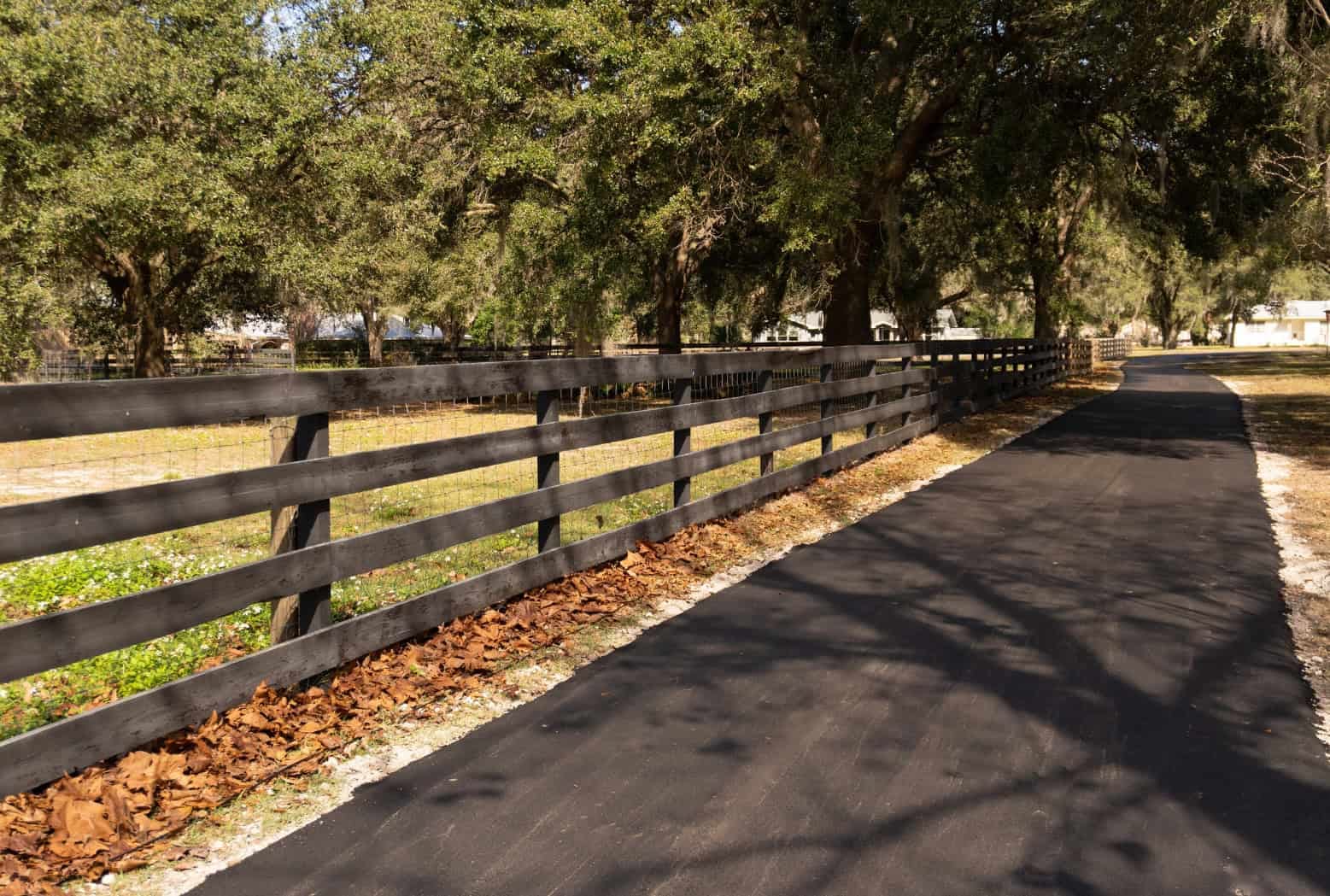
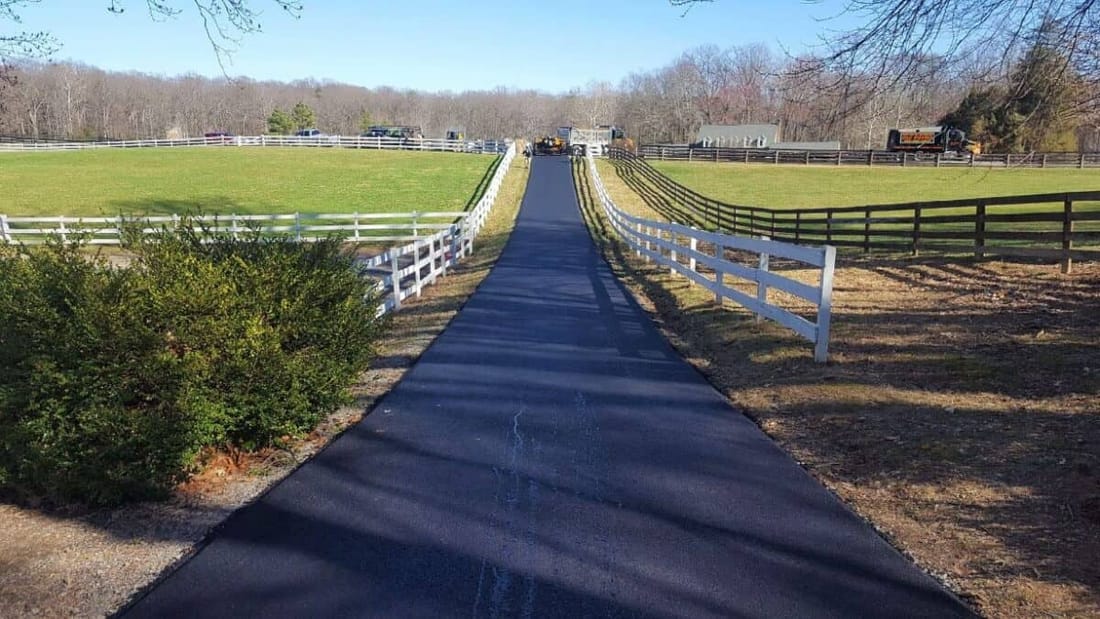
Improve access to your property with professional private road paving in Lexington, KY. We build and resurface asphalt lanes and shared driveways for rural homes, farms, and small communities. Our team designs each private road for proper drainage, strength, and smooth travel.
Precision Asphalt Lexington provides professional private road paving throughout Lexington, KY, Kentucky and the surrounding area. Our licensed, insured crew delivers safe, clean, on-time work with a free estimate before anything begins. Call (859) 710-8754 or request your free quote.
Private Road Paving for Lexington Properties
If you own a long driveway, a shared access lane, or a rural entry road in or around Lexington, your pavement has to handle more than just car traffic. It deals with horse trailers, delivery trucks, farm equipment, school buses, and the freeze-thaw cycles that central Kentucky is known for. Precision Asphalt Lexington focuses on private road and lane paving that is designed specifically for how you use your property, not just a one-size-fits-all subdivision street.
We work with homeowners, small farms, horse properties, and shared driveway associations throughout Fayette County and neighboring communities. Whether your private road runs a few hundred feet from Tates Creek Road to your house or winds a half mile through pasture, we design a pavement section that fits your soil, slope, and vehicle loads.
From the first site visit, our goal is to help you understand your options clearly. We walk the entire length of your road, look at drainage patterns, check existing gravel or pavement thickness where possible, and listen to how you actually use the lane. Many of the roads we rebuild in Lexington were originally put in as simple gravel farm roads or thin asphalt over compacted dirt. We correct those old shortcuts so you get a road that lasts.
How We Evaluate and Design Your Private Road
Good private road paving in Lexington starts with a realistic design. During our initial evaluation, Precision Asphalt Lexington looks at four key factors that determine how your road should be built: soil type, drainage, traffic load, and maintenance expectations.
Soil type is especially important in central Kentucky, where you often find clay subgrade that holds water. Clay swells when wet and shrinks when dry, which can crack thin asphalt. We probe the subgrade, check how firm it is underfoot and with equipment, and recommend undercutting or additional base stone where the ground is soft.
Drainage is the second major factor. Many older private lanes in rural Lexington simply follow the natural grade, with no real ditches or crowning. Water then sits on the surface or runs straight down the middle, cutting ruts and potholes. We design a proper crown (a slight high point in the center) and, where needed, shallow roadside ditches or swales so water moves off the driving surface quickly.
Traffic load is different on every property. A short driveway that only sees passenger cars can be built differently than a 1,000 foot lane that regularly handles hay trucks or horse trailers. We discuss current and future use, including any planned construction traffic, so we can adjust base depth and asphalt thickness.
Maintenance expectations and budget also guide the design. Some owners prefer a thicker, longer lasting pavement with less maintenance, while others want a more economical section with a plan for periodic chip sealing or overlays. We explain expected lifespan ranges for each option in plain language, so you can choose what makes sense.
Our Step-by-Step Private Road Paving Process
Precision Asphalt Lexington follows a staged process for private road and lane paving, which helps avoid the common failures you see on many older country lanes.
1. Clearing and rough grading: If we are building a new road, we start by removing vegetation, topsoil, and organic material. For existing roads, we strip out soft, pumping areas and heavy rutting. Then we rough grade to establish a consistent slope and future crown, using laser or GPS controls where needed for longer lanes.
2. Subgrade preparation: We compact the native soil with rollers, moisture-condition it if it is too dry or too wet, and mark any areas that deflect under equipment. Weak spots are undercut and replaced with compacted dense-grade aggregate (DGA) so you do not end up with isolated soft zones that later turn into potholes.
3. Base stone installation: Most private roads we pave around Lexington receive 4 to 8 inches of compacted DGA, depending on traffic and soil conditions. The stone is placed in lifts, typically 2 to 3 inches at a time, then compacted with vibratory rollers. This step is vital. A well-compacted base will carry the load far more effectively than simply laying thicker asphalt over marginal stone.
4. Fine grading and proof rolling: Before asphalt goes down, we fine grade the stone to establish the final crown and cross slope. Then we proof roll with a loaded truck or roller to identify any remaining weak spots. Any areas that move under load are cut out and repaired before we proceed.
5. Asphalt paving: For most private lanes, we recommend a two-course system: a base course (heavier, more stone, usually 2 to 3 inches compacted) and a surface course (smoother finish, 1.5 to 2 inches compacted). For lighter duty residential drive lanes we may use a single, carefully compacted lift, but we will explain the tradeoffs. Every load is placed hot and compacted quickly to achieve proper density.
6. Edging and tie-ins: We pay close attention to transitions where your private road meets public streets, barn aprons, concrete pads, and parking areas. Clean saw cuts and tapered tie-ins reduce bumps and help prevent cracking at those joints. On rural roads with grass shoulders, we backfill and feather the edges so water runs away from the asphalt, not under it.
7. Final walkthrough and care instructions: When the lane is complete, we walk it with you. We point out drainage paths, explain where to avoid parking heavy equipment during the first few days, and discuss a maintenance schedule tailored to your road.
Material and Design Options for Your Lane
Not every private road in Lexington has the same needs or budget. At Precision Asphalt Lexington, we adjust materials and design to match your property rather than forcing a standard specification.
Asphalt mix types: Heavier duty private roads that see regular truck traffic may use a coarser, high-stone-content base mix topped with a dense-graded surface mix. Light residential lanes often perform well with a single dense-graded mix chosen for flexibility, which helps with Kentucky's temperature swings.
Thickness choices: For short, car-only drives on firm ground, we may recommend around 6 inches of compacted stone with 2 to 2.5 inches of asphalt. For longer shared access roads or lanes serving multiple homes, thickness can increase to 8 inches or more of stone and 3 to 4 inches of asphalt in two lifts. If you expect frequent horse trailer or delivery truck traffic, we will err on the side of extra base.
Edge stabilization: On wider private roads or those with steep side slopes, we may suggest options such as stabilized shoulders, compacted gravel edge bands, or even concrete collars at tight curves and hill crests where turning stress is highest. This helps prevent edge cracking and unraveling.
Surface texture and appearance: Some property owners want a smoother drive for vehicles and mobility devices, while others prefer a slightly more textured surface for traction on hills. We can adjust roller passes and mix selection to create the right balance. For horse farms, we often recommend slightly higher texture on slopes leading to barns to improve footing for trucks and trailers.
Drainage enhancements: Where water problems already exist, options like shallow French drains along the uphill side, larger culverts under the lane, or re-graded swales can dramatically extend the life of the new pavement. We map these during the design phase so costs are clear upfront.
What Drives Cost and How We Help You Control It
The cost of private road paving in Lexington varies widely, and it is usually driven by three main factors: length and width, base and drainage work, and asphalt thickness.
Length and width are straightforward: more square footage means more materials and labor. However, there are smart ways to keep costs in check. For example, some owners in rural Fayette County choose a slightly narrower paved section with stabilized gravel shoulders instead of a full-width asphalt surface. You still get a comfortable driving lane but use less asphalt.
Base and drainage work can be the biggest variable. If your existing lane has a solid, well-compacted gravel base, we may only need minor repairs and grading before paving. If it was built on topsoil or has chronic wet spots, we will recommend undercutting and additional stone. While this increases initial cost, it usually prevents repeat failures and patching expenses over the next several years. During the estimate, we line-item these options so you can see exactly where your money is going.
Asphalt thickness also affects price. Thicker asphalt adds material cost but can reduce the need for major repairs later. Precision Asphalt Lexington explains the expected lifespan of each thickness option, as well as how future overlays could be added. Sometimes it makes sense to build a strong base and start with a moderate asphalt thickness, then plan for an overlay in 10 to 12 years instead of overspending on the first installation.
Access and logistics matter too. Long, winding lanes, limited truck access, or areas where we must stage materials off-site can affect labor and time. We walk through these items with you at the proposal stage, including any tree trimming, fence protection, or coordination with neighbors if the road is shared.
To help you budget, we can prioritize work in phases. For example, we might correct drainage and rebuild the worst sections in year one, then finish paving the remaining length the following season. We always aim for honest, transparent pricing that reflects actual field conditions, not just a generic per-square-foot number.
Common Private Road Problems in Lexington and How We Prevent Them
Many of the private roads we are called to fix around Lexington share the same problems: potholes that keep coming back, edges that break off into the ditch, cracking across the lane, and standing water that never seems to drain. Precision Asphalt Lexington designs each project to address these recurring issues at the root.
Recurring potholes usually signal a weak base or trapped water, not just surface wear. Instead of simply filling holes, we cut out failed sections, rebuild the stone base, and correct crown or drainage in that area. On new roads, we design the base and drainage so those failures do not occur in the first place.
Edge breakup is common on narrow country lanes where vehicles drive half on the pavement and half on the shoulder. We mitigate this by building proper stone support beyond the edge of the asphalt, using consistent compaction right to the edge, and, where traffic patterns demand it, slightly widening the travel lane so tires stay fully supported.
Transverse cracking, which runs across the width of the lane, often shows up where there are changes in base thickness, culvert crossings, or old patch boundaries. We minimize this by tying new work together with full-width, full-depth construction in critical areas instead of piecemeal layering.
Standing water accelerates every other type of damage. In central Kentucky, relatively gentle grades can make water problems look minor until winter freeze cycles take a toll. We use laser levels during grading, check culvert inlets and outlets, and adjust ditches so the finished pavement sheds water within minutes after a rain.
Before we leave your project, we explain simple owner maintenance: keeping ditches and culvert openings clear of leaves and gravel, avoiding heavy equipment parking on edges, and watching for early signs of drainage changes. With a solid build and basic care, a well-constructed private road or lane in Lexington can provide decades of reliable service.